
The Koreshan Unity
A communal utopia in southwest Florida-- now a State Park

By Jeffrey Schuster and K. McCook
The Koreshan Unity
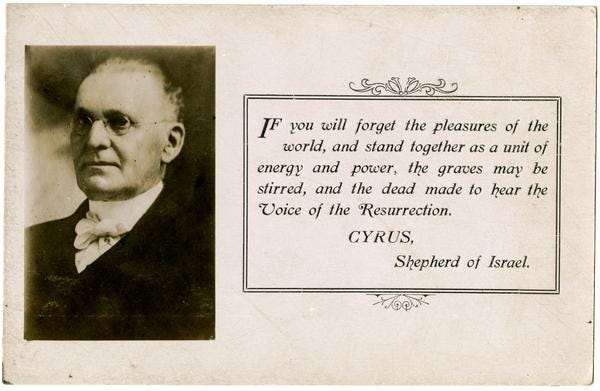
The Koreshan Unity was a utopian religious community founded in the late 19th century by Cyrus Reed Teed, a physician who later adopted the name Koresh (the Hebrew translation of Cyrus, meaning “shepherd”).12
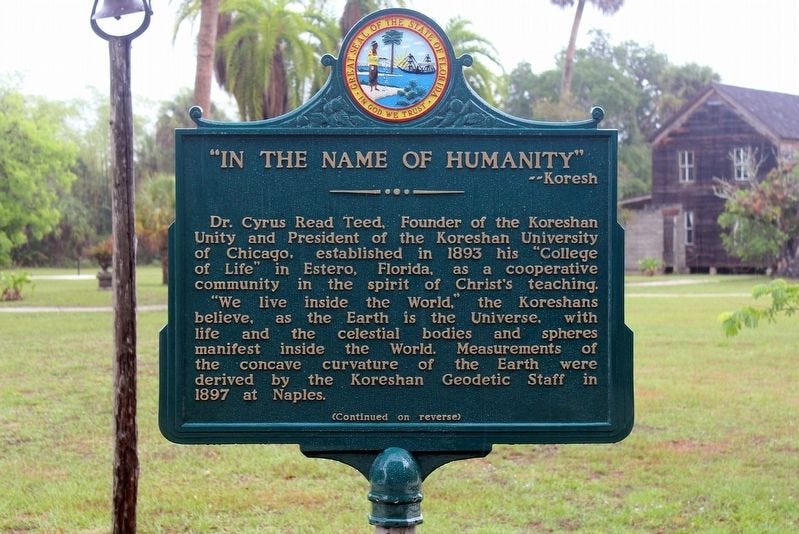
Initially established in upstate New York following Teed’s “illumination” in 1869, the group relocated to Chicago in the 1880s before settling in Estero, Florida, in 1894 to build their envisioned “New Jerusalem” on 320 acres of land.3
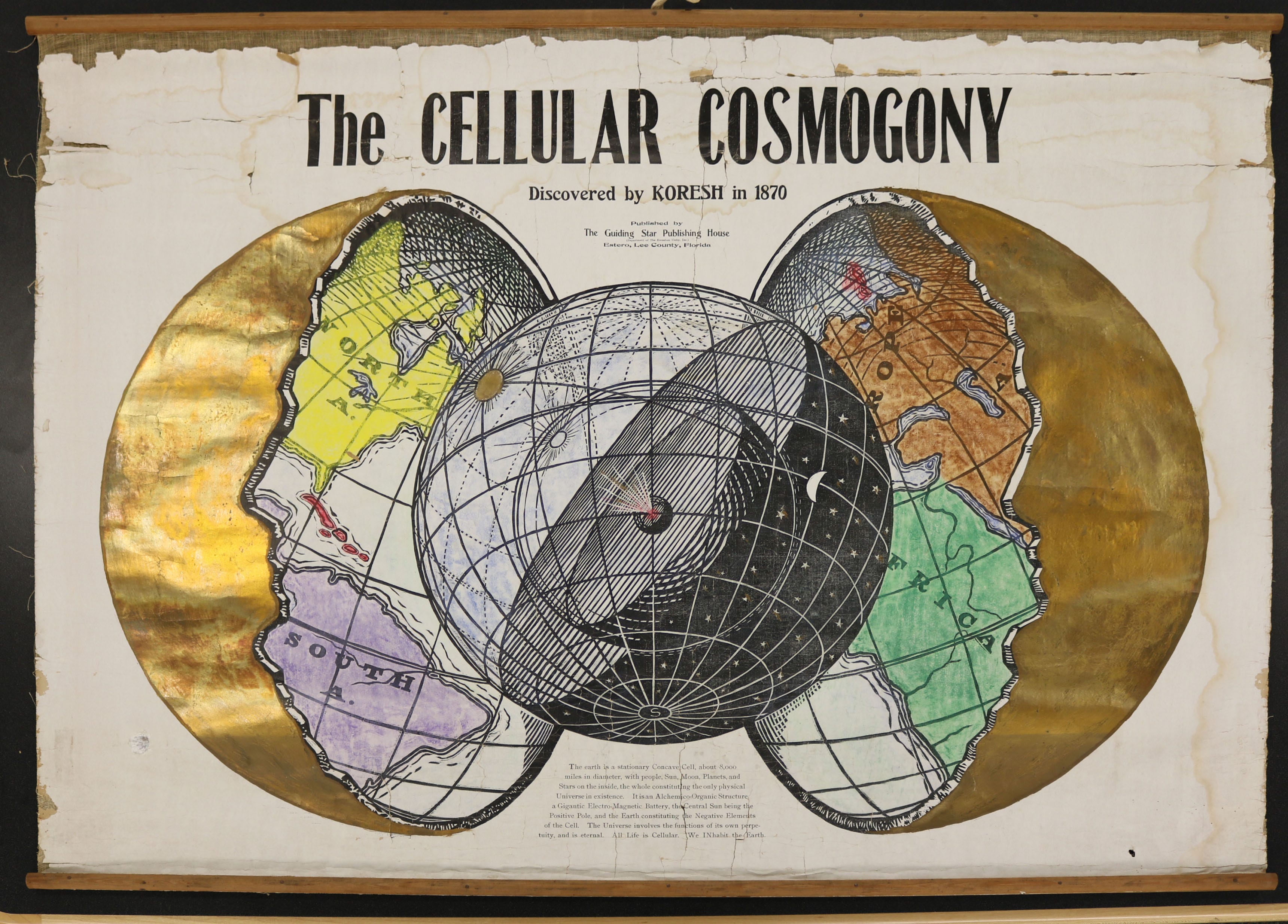
The community’s core doctrine, known as Koreshanity or Universiology, blended elements of reincarnation, alchemy, and religio-science, with its most distinctive belief being cellular cosmogony: the idea that the Earth is a hollow, concave sphere, and humanity lives on its inner surface, with the entire universe contained finitely within it.4
At its peak around 1903-1904, the Koreshan Unity had about 200 members and incorporated the Town of Estero, developing a self-sustaining settlement with over a dozen businesses, including The Guiding Star publishing house, bakery, general store, machine shop, and an early power plant that supplied electricity to the community and nearby areas before it was widely available in southwest Florida.
The Koreshan Unity emphasized communal living, shared wealth, celibacy as a spiritual practice, and a gender-equal leadership structure, including a Planetary Court managed by seven women who oversaw daily operations. They also hosted cultural events in their Art Hall, featuring plays, concerts, lectures, and religious activities.
Koreshan State Park
The community’s decline began after Teed’s death on December 22, 1908, as followers awaited his promised resurrection, which never occurred— membership dwindled over the decades.
By 1956, only five members remained, and in 1961, they donated 305 acres to the State of Florida, preserving the site as the Koreshan State Historic Site,5 now part of the Koreshan State Park.67
Koreshan Archives at Florida Gulf Coast University
The University Archives & Special Collections at Florida Gulf Coast University holds archives of the Koreshan Unity. In 2015 an exhibit was held.8
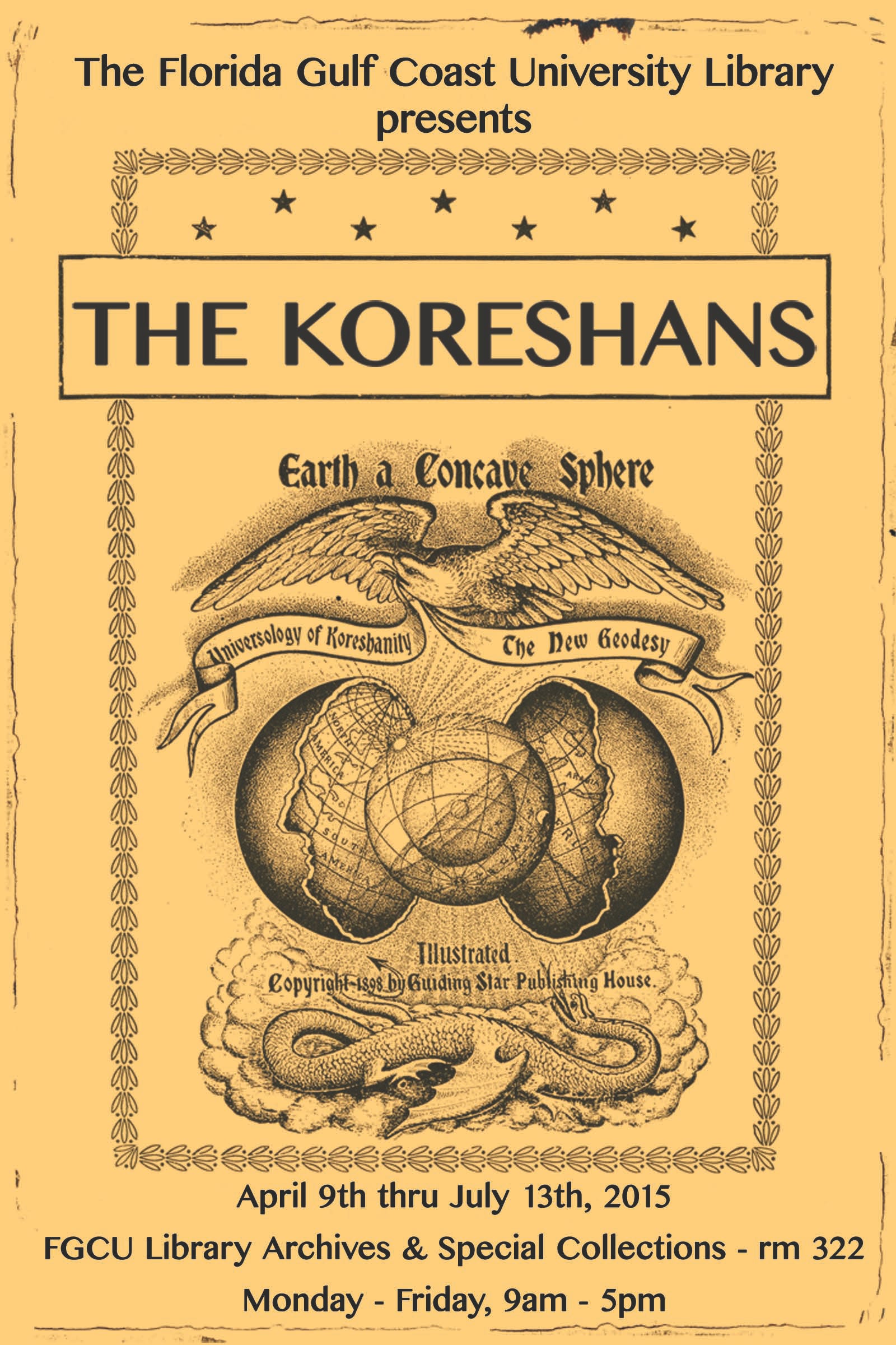
Koreshan Unity: A Quest for Utopia
Millner, Lyn. 2015. The Allure of Immortality: An American Cult, a Florida Swamp, and a Renegade Prophet. Gainesville: University Press of Florida.
Koresh, and Ulysses G. Morrow. 1898. The Cellular Cosmogony; or, the Earth a Concave Sphere Pt. I. The Universology of Koreshanity, by Koresh [Pseud.] Pt. II. The New Geodesy, by U.G. Morrow. Chicago: Guiding Star Pub. House. http://catalog.hathitrust.org/api/volumes/oclc/17788416.html
Tarlow, Sara A. 2006. “Representing Utopia: The Case of Cyrus Teed’s Koreshan Unity Settlement.” Historical Archaeology 40, no. 1: 89-99; Turner, K. 2010. “Becoming ‘Two-in-One’: Imaginary Space and Androgyny in Koreshan Universology.” Communal Societies 30, no. 2: 83-104.
The Koreshans. University Archives & Special Collections Exhibitions. Florida Gulf Coast University Library. 2015; Gates, L. (2015, April 16). FGCU exhibit provides inside look at Koreshan story. Naples Daily News. see also: Winsboro, Irvin D. S. 2004. “The Koreshan Communitarians’ Papers and Publications in Estero, 1894-1963.” Florida Historical Quarterly 83, no. 2: 173-190.
We don't seem to have as many cultic communities these days. They certainly had some colorful leaders. We had the Rajneeshis and Raelians wax and wane here in Oregon, local and state law ran them out. Been at least 30 years since we had something like that.
Neat. Didn't know about this one ...