
Umberto Eco Library Opens
Books retain the exact original arrangement desired by Eco

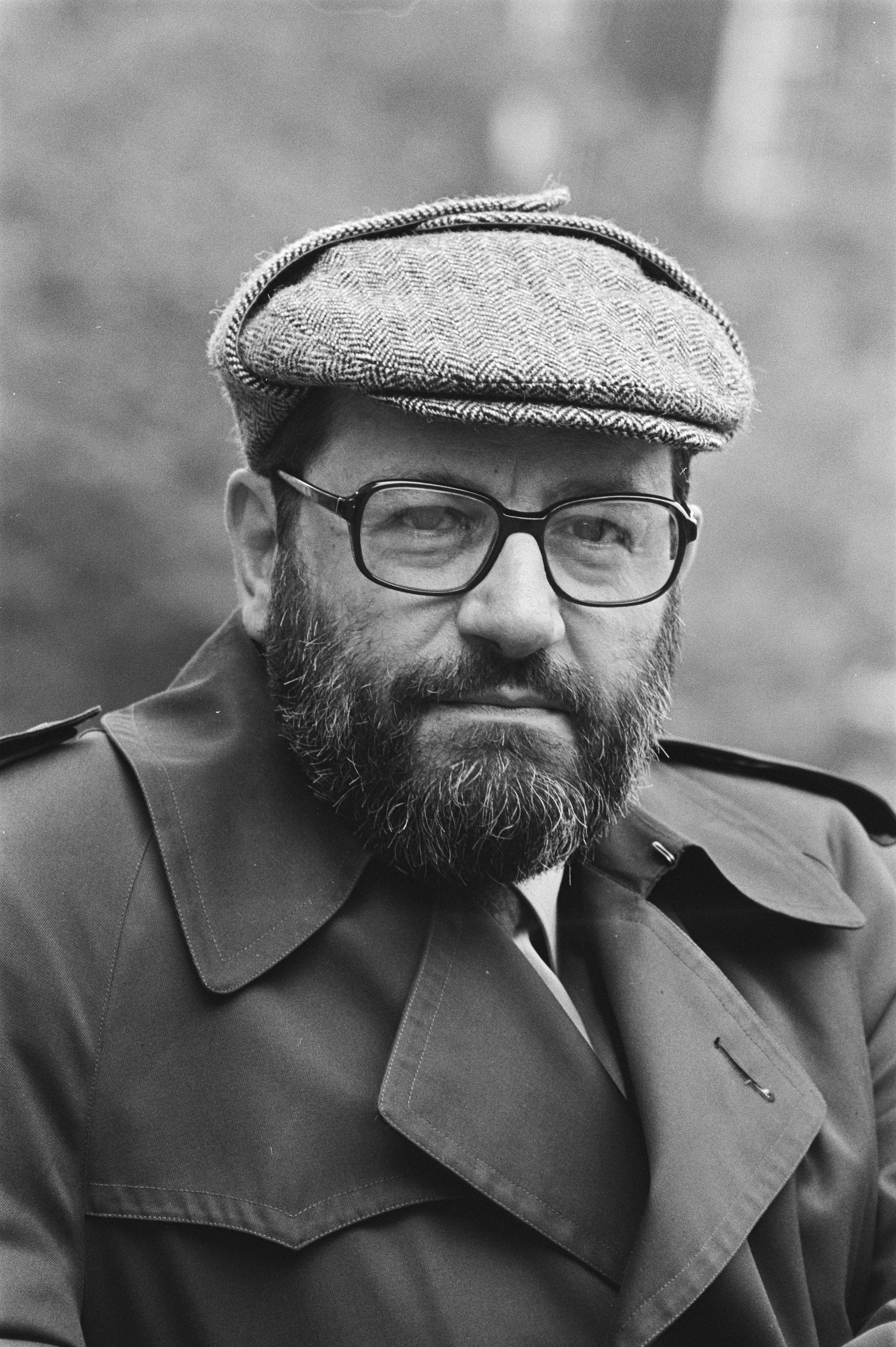
Umberto Eco (1932-2016) was an Italian medievalist, philosopher, semiotician, novelist, cultural critic, and political and social commentator.
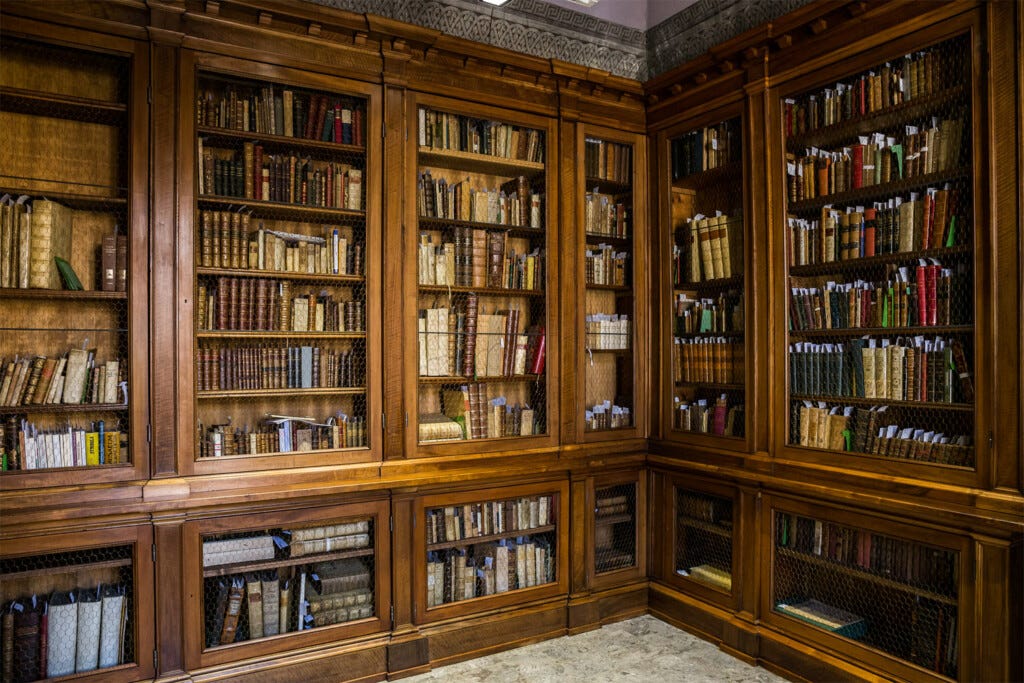
At Palazzo Poggi in Bologna, Italy., the 32 thousand volumes from the Milanese home-studio of Umberto Eco (Alessandria, 1932 - Milan, 2016) have just found a new permanent home. On the tenth anniversary of the death of the semiologist and intellectual who linked a very important phase of his university career to the Alma Mater of Bologna, making it one of the main international research centers in the field of semiotics and communication sciences, it is the twentieth-century wing of the historic Bolognese building.
"A true gift for Bologna, a city of knowledge, knowledge and Umberto Eco", underlines the mayor Matteo Lepore in celebrating the milestone: "Thanks to the generosity of the heirs and the collaboration with the University of Bologna, over 32 thousand volumes arrived from the house-studio in Milan now become a shared cultural heritage. The most extraordinary thing is that the books retain the exact original arrangement desired by Eco, making the rooms of this library a real laboratory of ideas ranging from medieval philosophy to classic Linus comics (the magazine was co-founded by Eco in 1965, ed.), from the great novels to studies on the Kabbalah and occultism"1
Official Bibliography of Umberto Eco project
The Official Bibliography of Umberto Eco project was created to provide an updated and curated account of the texts and works that make up Umberto Eco’s intellectual production.2
This bibliography is the result of an in-depth investigation based on a shelf-by-shelf verification of the bibliographic data found in the copies preserved in Umberto Eco’s working library and archive. Following the principle adopted by Eco himself in his own author’s bibliography, this catalogue is organized chronologically: for each work, it begins with the first edition — adding the first Italian edition when the original language differs — and connects each text to others through a system of internal cross-references.
Umberto Eco- Novels
All of Eco’s novels have been translated into English.
1980: Il nome della rosa — The Name of the Rose (1983)
1988: Il pendolo di Foucault — Foucault’s Pendulum (1989)
1994: L’isola del giorno prima — The Island of the Day Before (1995)
2000: Baudolino — Baudolino (2001)
2004: La misteriosa fiamma della regina Loana — The Mysterious Flame of Queen Loana (2005)
2010: Il cimitero di Praga — The Prague Cemetery (2011)
2015: Numero Zero — Numero Zero (2015)
Other writing.3
Fondazione Umberto Eco, “The Official Bibliography of Umberto Eco,” accessed July 8, 2026, https://fondazioneumbertoeco.org/en/bibliografia.
Non-Fiction (Essays, Studies, and Collections)
1956: Il problema estetico in San Tommaso — The Aesthetics of Thomas Aquinas (1988, revised)
1959: Sviluppo dell’estetica medievale (contribution) — Art and Beauty in the Middle Ages (1985)
1962 (rev. 1976): Opera aperta — The Open Work (1989)
1963: Diario minimo — Misreadings (1993)
1964: Apocalittici e integrati — partial translation Apocalypse Postponed (1994)
1965: Le poetiche di Joyce — The Aesthetics of Chaosmos: The Middle Ages of James Joyce (various English editions, e.g., 1989)
1973: Il costume di casa — Faith in Fakes: Travels in Hyperreality (1986; also published as Travels in Hyperreality)
1975: Trattato di semiotica generale — A Theory of Semiotics (1976)
1977: Come si fa una tesi di laurea — How to Write a Thesis (2015)
1979: Various essays compiled as The Role of the Reader: Explorations in the Semiotics of Texts (English edition)
1984: Semiotica e filosofia del linguaggio — Semiotics and the Philosophy of Language (English editions from mid-1980s)
1990: I limiti dell’interpretazione — The Limits of Interpretation (1990)
1992: Il secondo diario minimo — selections in How to Travel with a Salmon & Other Essays (1994/1998)
1993: La ricerca della lingua perfetta nella cultura europea — The Search for the Perfect Language (1995)
1994: Six Walks in the Fictional Woods (English publication; based on Harvard lectures)
1995/1997: Cinque scritti morali (includes the “Ur-Fascism” essay) — Five Moral Pieces (2001); “Eternal Fascism” essay widely available
1997: Kant e l’ornitorinco — Kant and the Platypus: Essays on Language and Cognition (1999)
1998: Serendipities: Language and Lunacy (English collection/publication)
2002/2003: Sulla letteratura — On Literature (2004)
2003: Mouse or Rat?: Translation as Negotiation (English)
2004: Storia della bellezza (edited) — History of Beauty / On Beauty (2004)
2006: A passo di gambero — Turning Back the Clock: Hot Wars and Media Populism (2007)
2007: Storia della bruttezza — On Ugliness (2007)
2007: Dall’albero al labirinto — From the Tree to the Labyrinth: Historical Studies on the Sign and Interpretation (2014)
2009: La vertigine della lista — The Infinity of Lists (2009)
2011: Costruire il nemico e altri scritti occasionali — Inventing the Enemy (2012)
2013: Storia delle terre e dei luoghi leggendari — The Book of Legendary Lands (2013)
2016: Pape Satàn Aleppe: Cronache di una società liquida — Chronicles of a Liquid Society (2017)
2017: Sulle spalle dei giganti — On the Shoulders of Giants (2019)
What a delight this must be ...
Thanks for reminding me how much I enjoyed his first two books. I'll set aside time this winter to read the rest.