
GIANTS
A conference in Vienna, the Cerne Abbas Giant, Giants in the Landscape

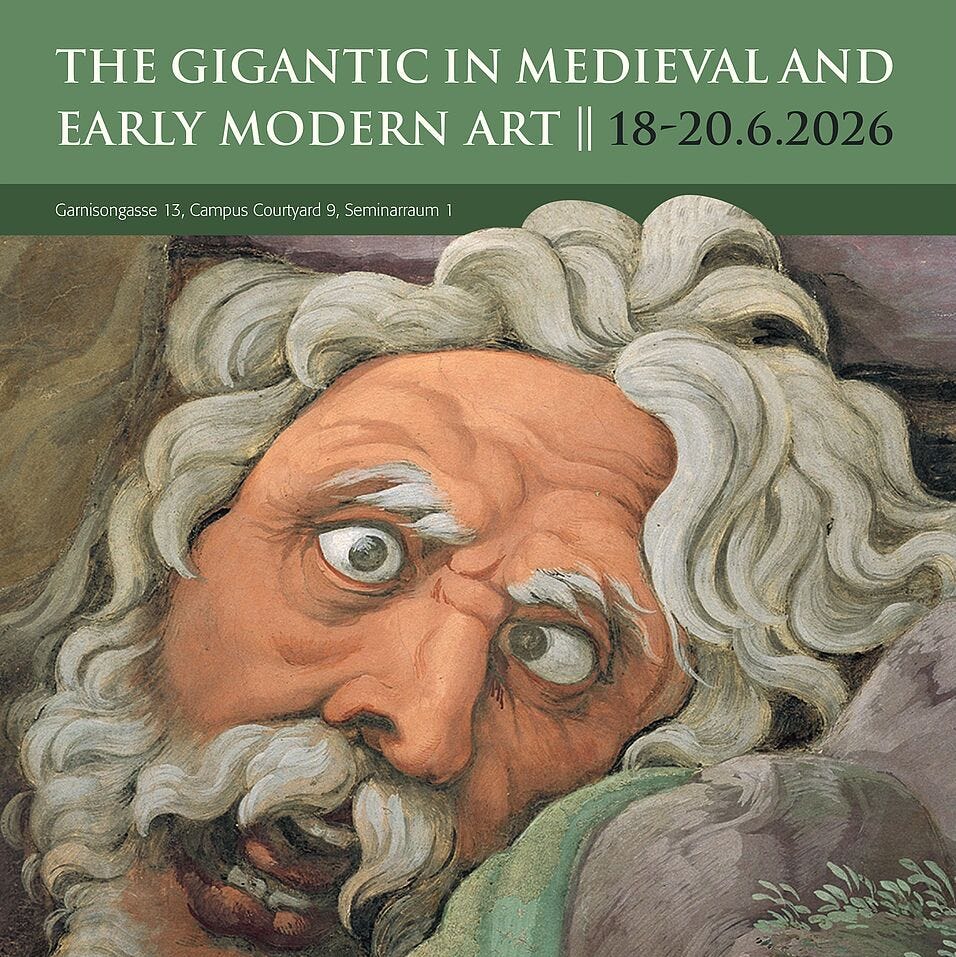
An international conference on the “Gigantic in Medieval and Early Modern Art” was hosted in June 2026 by the Department of Art History at the University of Vienna.1
Here are scholarly works by two of the participants:
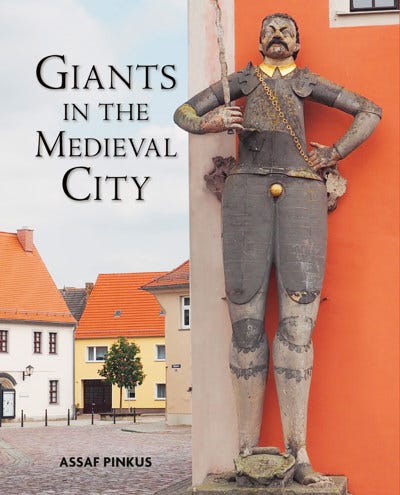
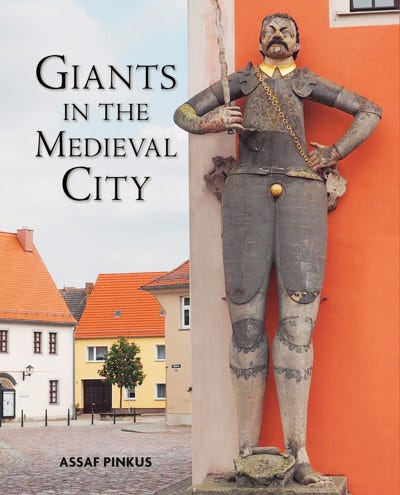
Pinkus, Assaf. Giants in the Medieval City. Turnhout: Brepols, 2024 (Studies in the Visual Cultures of the Middle Ages, vol. 20). With contributions by Noeit Williger Aviam, Orly Amit, and Michal Ozeri. 2
O’Bryan, Robin, and Felicia Else, eds. Giants and Dwarfs in European Art and Culture, ca. 1350–1750: Real, Imagined, Metaphorical. Amsterdam: Amsterdam University Press, 2024 (Monsters and Marvels series)..
Cerne Abbas Giant
Thomas Morcom and Helen Gittos. “The Cerne Giant in Its Early Medieval Context.”
The recent dating of the Cerne Abbas Giant came as a surprise. This huge, naked figure was cut into a Dorset hillside not, as many have supposed, in prehistory, nor in the early modernperiod, but in the early Middle Ages. This means that for the first time it is possible to place the Cerne Giant within a cultural context. In this article, we propose an explanation for when and why he was originally cut as an image of Hercules. We also argue that, contrary to con-ventional views, he is referred to in an early medieval source and that this, in turn, helps to demonstrate that by the eleventh century he was being reinterpreted in a surprising way,as Saint Eadwold. This is only one example of many such reimaginings, among which one of the most enduring is that he is neither classical hero nor saint but instead an image of the pagan god Helith. 3
Giants in the Landscape
Anglo-Saxons seemingly maintained and cut giant-size figures into the turf on chalk escarpments. What did they call them? And might there have once been many more? Join Bob Trubshaw in taking some giant strides over England’s hillsides.

Pinkus, Assaf. “Out of Scale: Naming and Identity of Late Medieval Giants.” In Giants and Dwarfs in European Art and Culture, ca. 1350–1750: Real, Imagined, Metaphorical, edited by Robin O’Bryan and Felicia Else, 69–93. Amsterdam: Amsterdam University Press, 2024.
Pinkus, Assaf. “Experiencing the Gigantic in Late Medieval Art.” Revista de Arte Medieval 37 (2021): 1–21.
Pinkus, Assaf. “The Giant of Bremen: Roland and the ‘Colossus Imagination.’” Speculum 93, no. 2 (2018): 387–429.
Morcom, Thomas, and Helen Gittos. “The Cerne Giant in Its Early Medieval Context.” Speculum 99, no. 1 (January 2024): 1–38. https://doi.org/10.1086/727992.
Fascinating information about these giant figures cut into the chalk cliffs. One marvels over the commitment of the artists to their work.
Fascinating! I especially love the white chalk horses.
This has no connection to giants or horses cut into the chalk cliffs, but I have no other means to contact you, Kathleen, and I think you would be fascinated by this - "An AI librarian is being installed in space." This youtube video describes it in detail: https://youtu.be/8r-XTOXeDWM
The narrator also proposes that it was not fire that destroyed the library at Alexandria and other libraries, but rather librarians and the public becoming disinterested and "walking off the job" so to speak that brought these libraries down. This AI librarian presumably will work year in and year out, 24 hours a day, overseeing a massive digital library in space.